
Protective intelligence is the work of establishing who could take an interest in a person, family or organisation, what they could learn, and what that means for their protection. King Safety and Security (KSS) uses it to give clients an accurate view of their risk, and to make sure the security around them responds to what is actually changing.
Why intelligence comes first
Most security is built around what can be seen: the residence, the journey, the venue. The work that precedes a credible threat is often invisible. It is research, observation and the assembly of small pieces of information into a picture of someone’s life.
Good intelligence brings that picture into view early. It tells a family office where a Principal is exposed, tells a protective team what has changed, and tells a board whether a concern deserves a response. Just as important, it can show when a concern does not justify more security. We explain the thinking further in Digital Protective Intelligence.
Protective intelligence is not cyber security. Where network security, forensics or incident response are needed, specialist partners are brought in and managed as part of the work.
How clients use our intelligence
- Ongoing: retained monitoring and a regular view of the client’s risk, feeding directly into their security arrangements
- Focused: a defined piece of work, such as a vulnerability assessment, a digital risk review, due diligence or an investigation
- Urgent: rapid support when a specific threat, approach or incident needs an immediate answer
Our intelligence services

Intelligence Monitoring and Alerts
Retained monitoring of the threats, locations and online activity relevant to a client, filtered by analysts so that only what matters reaches the people who can act on it.

Personal Vulnerability Assessments
An independent review of how exposed a person or family is across their whole life: home and work, routines and travel, the people around them, and what can be learned about them online.

Digital Risk
An assessment of what can be learned online about a Principal, family, staff or organisation, followed by practical steps to reduce and monitor that exposure, including the removal of sensitive information where possible.

Surveillance, Investigations and Due Diligence
Discreet, lawful investigative work to establish the facts behind a concern, including hostile surveillance, internal concerns and threats to reputation. It includes due diligence and vetting of household staff, advisers, partners and investments, so a family or organisation knows who it is dealing with before it commits.
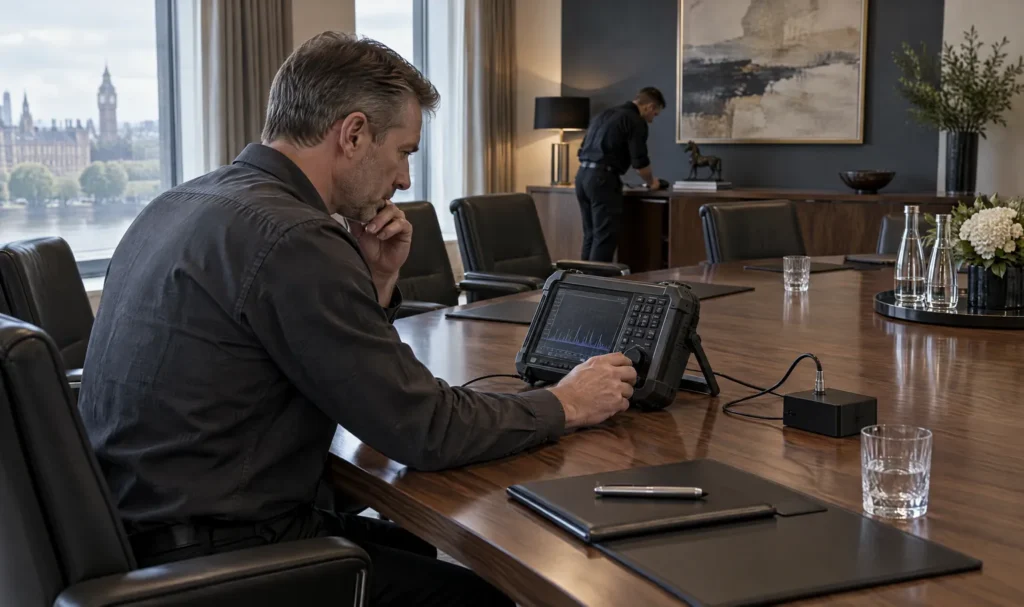
Technical Surveillance Countermeasures (TSCM)
Sweeps of residences, offices, vehicles and meeting spaces for listening devices, trackers and other technical surveillance, delivered by vetted specialists under KSS oversight.
FAQs
It is the work of establishing who could take an interest in a person, family or organisation, what they could learn, and what that means for their protection. It informs decisions on security, rather than replacing them.
Cyber security protects networks and systems. Protective intelligence concerns people: what can be established about them, who may be interested, and how that bears on their physical safety and privacy.
Principals and families, family offices, corporate leadership teams, and those responsible for protective teams, travel or events.
No. Many clients use intelligence on its own, or to decide whether a protective team is needed at all.
Yes. We carry out due diligence and vetting of household staff, advisers, partners and investments, as a stand-alone piece of work or as part of a wider security arrangement.
Start with a confidential conversation.
Tell us what prompted the question. We will tell you what intelligence could establish, and whether you need it.
We handle your details in confidence and in line with our privacy policy. We will only use them to respond to your enquiry.