
King Safety and Security (KSS) provides secure ground transport and vetted drivers for private clients, family offices and organisations, in the UK and abroad. That includes places a client has not been before, where the question is who can be trusted to drive them. Every journey is planned from an assessment of the risk, and KSS remains accountable for it wherever it takes place.

The question clients usually ask
Most enquiries start with something simple. A Principal is travelling somewhere unfamiliar next week. An executive assistant or family office has found a car company online, and has no way of knowing who will turn up, what checks have been done, or what happens if something goes wrong.
The journey is often the most exposed part of a trip. It is when someone is most predictable, and when they depend most on a person they have never met. It is also dangerous in the ordinary sense: US government health guidance names vehicle crashes as the leading cause of non-natural death among its citizens abroad.
What we provide
- Vetted chauffeurs: discreet, professional drivers, where the risk is low and reliability matters most
- Close protection drivers: KSS security drivers trained in protective driving, route planning and contingency, qualified to FREC 3 in emergency medical care, and carrying a medical kit
- Local security drivers: vetted in-country drivers who know the roads and local conditions, working to a KSS plan
- Driver and operative teams: a dedicated driver alongside close protection operatives selected through KSS’s proprietary Selection Day process, for Principals who need protection on foot as well as on the road
- Multi-vehicle moves: families, delegations and teams moving together, with arrivals and departures managed
- Retained drivers: a regular driver who knows the family’s or executive’s routines, schedule and preferences
- Single journeys: one airport arrival or a short visit, as a stand-alone service
Where we can, we keep driving and protection as separate roles. A driver’s attention belongs on the road, and an operative’s belongs on what is happening around the Principal.
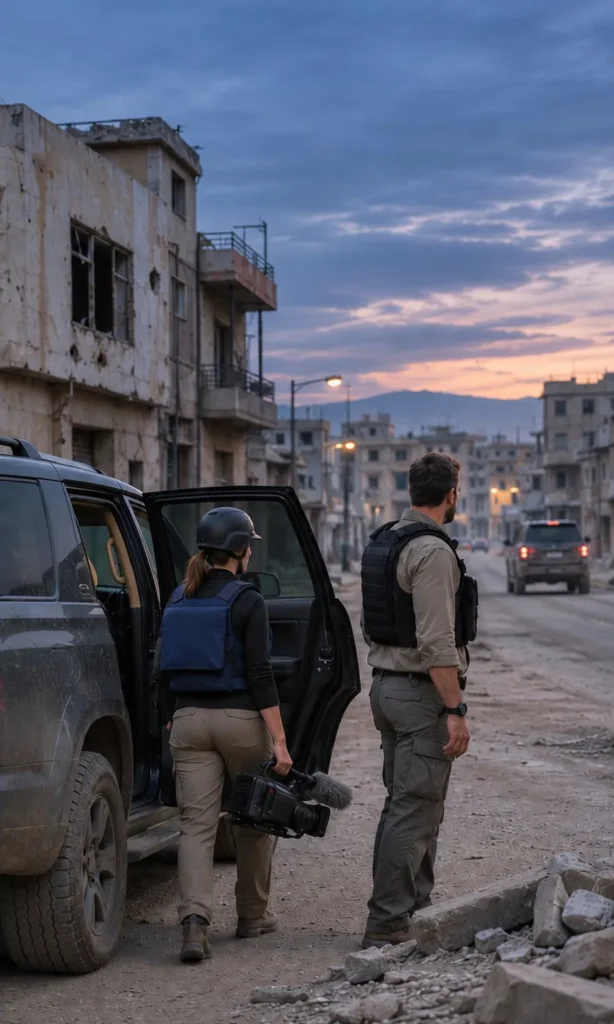
Travel to new and austere environments
Moving someone safely through an unfamiliar country takes more than a good driver. Roads, policing, medical care and local norms may all be different, and a plan that works in London may not work there. Before the journey, we can provide:
- A travel risk assessment: analysts look at the destination, the routes and the current picture, so that recommendations reflect the actual risk
- Journey planning: routes, alternatives, timings, safe stopping points and arrival arrangements
- Airport and border arrivals: meeting the client on arrival and managing the move from aircraft to vehicle
- A medical plan: what care is available, where it is, and how to reach it
- Communications and check-ins: who knows where the vehicle is, and what happens if it does not arrive. Movements can be tracked, with welfare checks at agreed intervals, where the risk justifies it
Some trips need all of this and some need very little. We will tell you which applies, including when a trip does not need much security at all. Where a client needs a wider programme, this forms part of Travel Risk Management or our work in hostile environments.
What "vetted" means
Many companies describe their partners as vetted. For KSS, it means a documented onboarding process that a partner must complete before being given work. A partner that cannot meet it is not activated, and one that stops meeting it is suspended while we review the position.
- The company: reference checks and open-source research on the business and its key people, and verification of where it can actually operate. Partners must separate what they have on the ground from what they would source on request, and overstating coverage is grounds for removal
- Licensing: evidence of the licences and permits required in that country. Where no licensing scheme exists, the partner must document the vetting and training it applies instead, and we assess it
- Vetting and screening: identity verification, criminal record checks, at least five years of employment history and references for anyone deployed on a KSS engagement, aligned to BS 7858 or the national equivalent. We can also carry out our own checks on anyone proposed
- Insurance: current public liability, professional indemnity and employer’s liability cover, evidenced before the first deployment and reviewed annually
- Contracts and conduct: a signed service agreement and non-disclosure agreement, with commitments on data protection, anti-bribery, modern slavery, and health and safety, and a code of conduct that covers the use of force
- Working alongside them: where we work with a partner regularly, we train with them, learn their systems and share what we know
- Oversight: KSS holds project management authority on every engagement. A KSS team lead or remote operations manager oversees quality, standards and reporting, and we can audit a partner’s documentation and spot-check its people
Standards differ between countries, so where an exact equivalent does not exist we assess the closest lawful alternative, and any significant difference is recorded in the partner’s agreement. We have declined to work with providers that would not show us this documentation.
The client deals with KSS throughout, rather than with a chain of suppliers. Where the risk requires it, a KSS lead travels and works alongside the local team, from one operational plan. We have an established partner network, but not in every country. Where we do not have a partner we would trust with a client, we will say so, and tell you what it would take to find one.
In practice: Rio de Janeiro
A private client party visiting Rio de Janeiro needed to move around the city safely. KSS prepared a travel threat assessment before departure, then deployed a three-vehicle convoy with local security drivers from our established partner in Brazil, led by a British security lead. Everyone worked from one operational plan, with movements tracked and regular welfare checks. The visit went as planned.
Vehicles and aircraft
Vehicles are chosen for the journey and the setting, from executive and ultra-luxury saloons, people carriers and premium SUVs to capable four-wheel-drive vehicles where the roads demand them. In some places a discreet, locally common vehicle is safer than a luxury one, because it attracts less attention.
Where the risk calls for it, armoured vehicles can be arranged. We can also fit laminate security film to a client’s existing vehicles, and arrange up-armouring or the purchase of an armoured vehicle through specialist partners.
Where a journey goes beyond the road, we can arrange private jets and helicopters.
Part of a wider arrangement
Secure transport works on its own, or alongside the rest of a client’s security. It is often the first thing a family or organisation asks us for, and it can show what else needs attention.
- Close Protection: operatives and drivers working from one plan
- Family Office Security: travel and transport managed as part of the family’s wider security
- Personal Vulnerability Assessments: how a person’s routines and movements create exposure
- Intelligence Monitoring: location alerts and updates while a client is travelling
FAQs
A chauffeur provides a comfortable, professional journey. A security driver is also trained to plan routes, spot problems early, avoid or leave a dangerous situation, and respond to an emergency. Many journeys only need a good chauffeur who has been properly checked. We will advise which you need.
Yes. KSS works with established partners internationally, and we will tell you plainly if we do not have one we would trust in a particular place. You deal with KSS throughout.
Partners must complete a documented onboarding process before being given work. We check the company and its key people, its licensing, its insurance, and how it screens anyone it deploys, and it signs our service agreement and non-disclosure agreement. KSS then leads the work and oversees quality and reporting, and a partner that stops meeting the standard is suspended. A recommendation or a website is not enough.
Yes. You can use it for a single airport arrival, a short trip or a regular requirement, without any other KSS service.
We advise against it where it can be avoided. One person cannot give full attention to the road and to what is happening around the Principal at the same time. A dedicated driver allows each to do their job properly.
Most clients do not. Armour suits specific, assessed threats, and it can draw attention in the wrong setting. We will advise what the risk calls for, and arrange it if needed.
Often at short notice, depending on the location. The assessment is proportionate to the time available, and is shortened under pressure rather than skipped.
Secure transportation concerns the journey itself. Travel Risk Management covers a person’s or organisation’s wider travel, including policies, monitoring and emergency response.
Cost depends on the location, the drivers and vehicles required, and how long they are needed. We will give you a figure once we understand the journey and have assessed the risk.
Tell us where they are going.
Tell us who is travelling, where and when. We will treat the conversation in confidence and tell you what the journey needs.
We handle your details in confidence and in line with our privacy policy. We will only use them to respond to your enquiry.